How to Catch Crappie
Best places, best times, and expert guides for crappie fishing.
Featured Crappie Guides
Expert captains ready to take you on your next Crappie adventure.
Keeping It Crappie
Dardanelle, Arkansas
Keeping It Crappie Guide Service in Arkansas offers crappie fishing charters on Lake Dardanelle, providing gear, instruction, and a 21’ Skeeter bass boat.
Captain Josh Crappie Fishing
Gainesville, Georgia
Guide Josh Crappie Fishing fishes top waters in Lake Lanier, Lake Lanier Crappie Fishing, Crappie Fishing, Crappie, Crappie Guide, Fishing Guide, Lake Lanier Fishing Guide, lake lanier fishing charters,
Open Water Guide Service
Tiptonville, Tennessee
My name is Shane Walley and I am the head guide for Open Water Guide Service. I offer guided crappie and bluegill fishing trips on Reelfoot Lake in Northwest Tennessee.
Reelfootlakefishingguide
Hornbeak, Tennessee
Reelfoot lake fishing guide, reelfoot lake crappie guide, fishing guide, crappie guide.
Plan a Crappie Fishing Trip
Find the best times and places to catch Crappie, and get matched with experienced guides.
Best Time to Catch Crappie
Peak months for Crappie fishing across the US.
Best Places to Catch Crappie
Top 6 cities ranked by guide availability and species data quality.
States Where Crappie Are Found
Alabama
View guide →
Alaska
View guide →
Arizona
View guide →
Arkansas
View guide →
California
View guide →
Colorado
View guide →
Connecticut
View guide →
Florida
View guide →
Georgia
View guide →
Idaho
View guide →
Illinois
View guide →
Kentucky
View guide →
Louisiana
View guide →
Michigan
View guide →

Minnesota
View guide →
Mississippi
View guide →
Missouri
View guide →
Montana
View guide →
Nevada
View guide →
New York
View guide →
North Carolina
View guide →
Ohio
View guide →
Oklahoma
View guide →
Oregon
View guide →
Pennsylvania
View guide →
South Carolina
View guide →
Tennessee
View guide →
Texas
View guide →
Utah
View guide →
Vermont
View guide →
Virginia
View guide →
Washington
View guide →
Wisconsin
View guide →
Wyoming
View guide →
Top Locations for Crappie
Seasonal Activity Chart
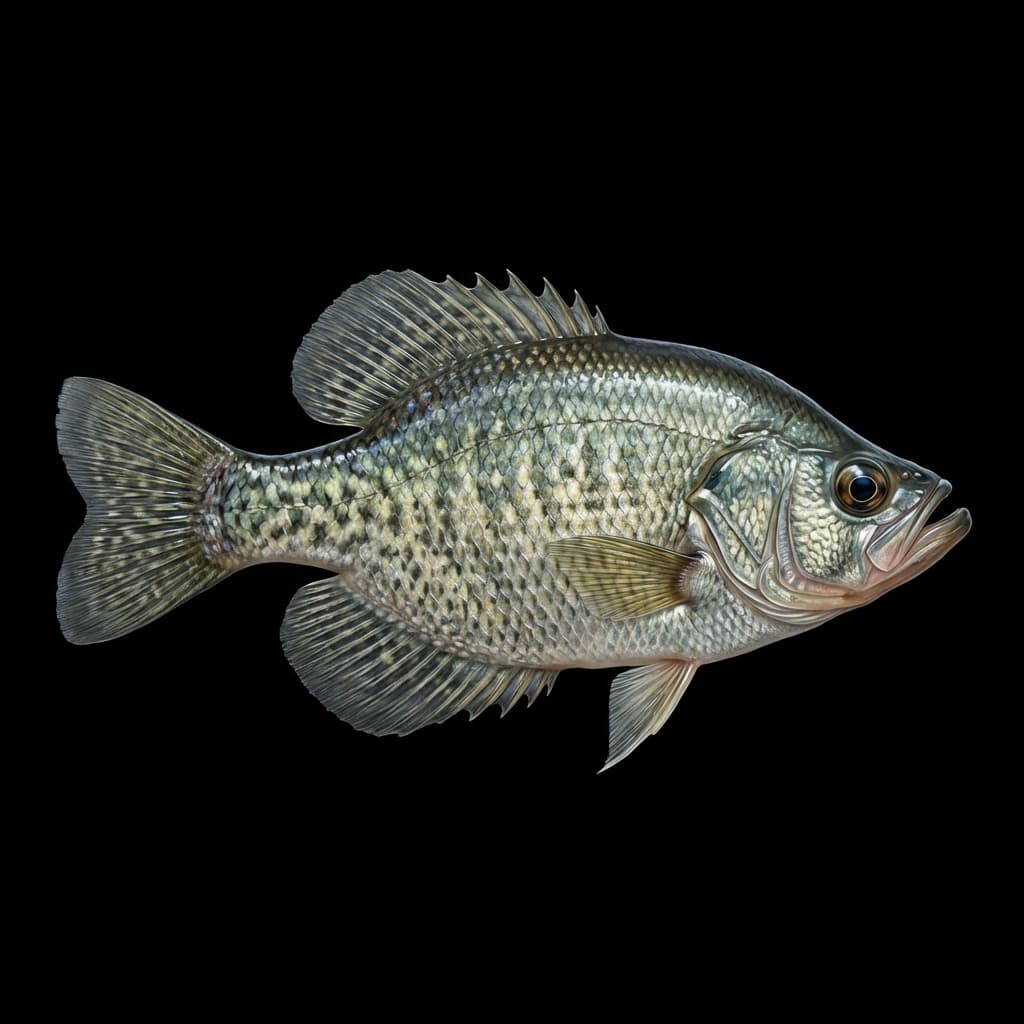
Crappie
Pomoxis nigromaculatus
Also known as: Black Crappie, White Crappie
Crappie, both black and white varieties, are highly sought-after panfish, prized for their delicious, mild flavor and delicate texture. Found in freshwater lakes, reservoirs, and slow-moving rivers across much of North America, crappie are a favorite target for anglers of all skill levels. Their tendency to school together, especially during the spring spawning season, makes them a rewarding catch, often leading to a tasty fish fry. They're a great species to target on family fishing trips.
Effective crappie fishing techniques include jigging, live bait fishing, casting, and spider rigging. Small jigs, typically 1/16 to 1/8 ounce, tipped with soft plastic trailers or live minnows, are highly effective. When jigging, vary your retrieve until you find what the fish prefer. Live bait, such as small minnows or crappie minnows, fished under a bobber or slip float, is a classic method. Spider rigging, which involves using multiple rods with different baits and depths, is a popular technique for covering a lot of water and locating schools of crappie. Light to medium-light spinning gear is ideal, with line in the 4-8 pound test range.
Crappie fishing is often best during the spring spawning season, when they move into shallow water to nest. Look for them near submerged timber, brush piles, and weed beds. As the water warms, crappie tend to move deeper, seeking cooler temperatures and shade. During the summer, try fishing around docks, bridge pilings, and deep cover. In the fall, they often return to shallower water as the water cools down again. Pay attention to water temperature and clarity, as these factors can significantly impact crappie behavior.
For beginners, start by targeting areas with known crappie populations and focusing on simple techniques like bobber fishing with live minnows. Look for structure in the water, such as fallen trees or submerged brush, as these areas often hold crappie. Experiment with different jig colors and retrieves until you find what works best. Local bait shops and fishing reports can provide valuable information on current conditions and productive areas. In areas like Cumming, GA, crappie fishing is a local pastime.
How to Catch Crappie
Frequently Asked Questions
When is the best time to catch Crappie?
Across the US, the best months for Crappie are generally March, April, May, October, November, though timing shifts by state.
Where can you catch Crappie in the US?
Crappie is found in 34 states, including Alabama, Alaska, Arizona, Arkansas, California, Colorado. Pick a state to see local guides and regulations.
Is Crappie a freshwater or saltwater fish?
Crappie is a freshwater species. Look for it in lakes, rivers, and reservoirs.
How big does Crappie get?
Typical Crappie run about 0.5-2 lbs, 8-12 inches, though trophy fish exceed that.
What else is Crappie called?
Crappie (Pomoxis nigromaculatus) is also known as Black Crappie, White Crappie.